

Met gala metrics
Bezos, billionaires, boycotts, and where the masses stand

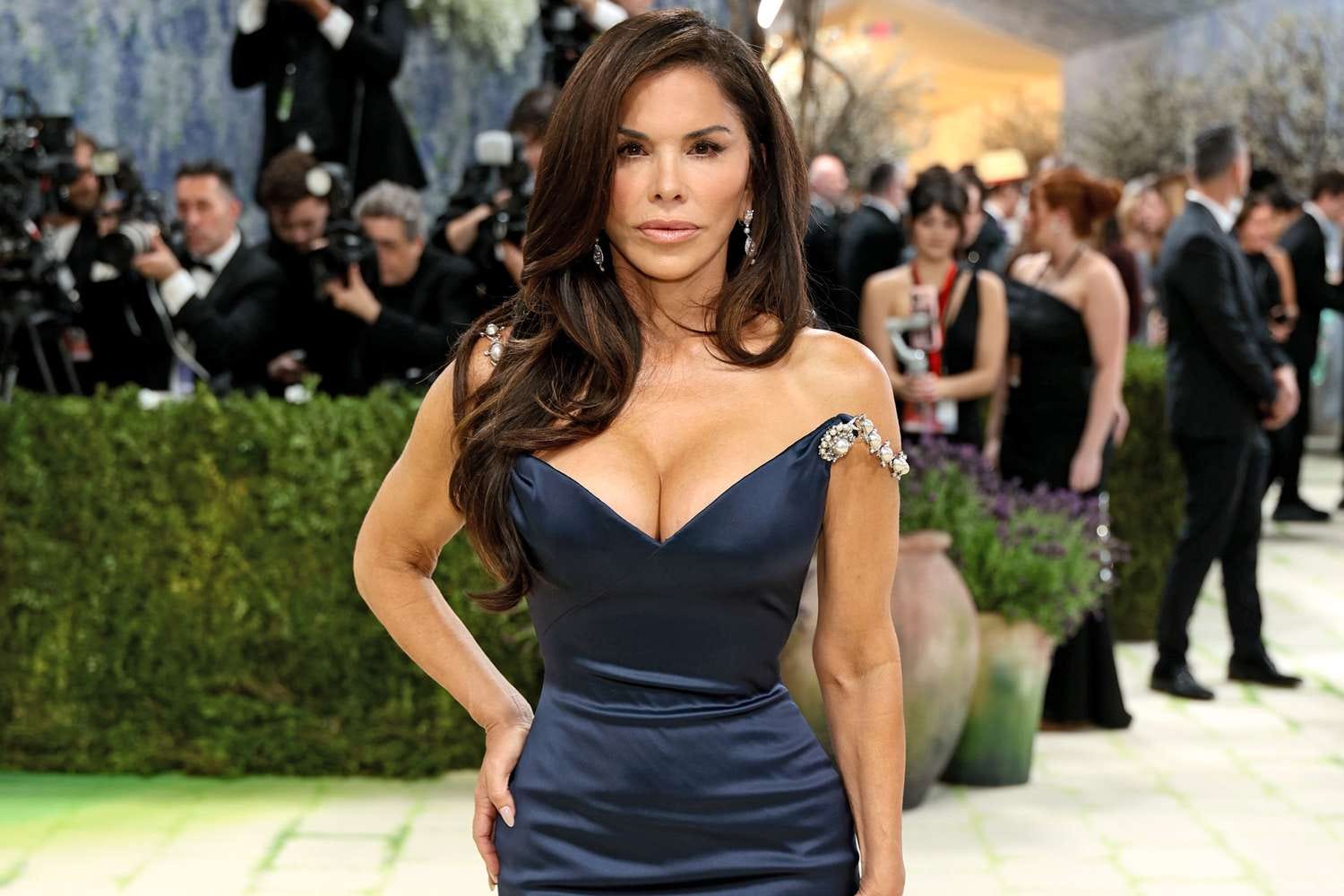
2 days ago I posted one of my data-driven fashion event reviews, this time covering the 2026 Met Gala. For this one, I scraped Instagram posts from 15 fashion magazine accounts, creating a dataset of the likes, (a sample of) comments, and captions for 695 posts. From here I did some light data manipulation, and could associate engagement metrics with specific people or brands or topics. This can give us some perspective on which looks had the most eyeballs on them (and sometimes why).
Now you (my dear followers) had a lot of follow-up questions that were really great (I’ve curated such a smart audience over there).
So I am going to do my best to answer them.
From anz.glo : did conversation volume this year have anything to do with protest buzz though? would love to see more of a deep dive into sentiment for that / the debuts!
Similarly from tamburwell : Would love to see the sentiment analysis of this year’s gala - did the controversy amplify the message of the anti-billionaire protestors or did the protest activity inadvertently feed the algorithm in favour of the gala and the Bezoses?
To start addressing these questions, I first looked at my own comment section. Whether because it was a review post or because my audience skews a little more politically minded, 17% of all comments mentioned Bezos, billionaires, boycotts, protests, Palestine, the Hunger Games, or the current state of the world (I’ll be grouping these under “The Topics” from here on). And 31% of liked comments mentioned The Topics — by which I mean I weighted comments by their likes, so a comment with 50 likes counted 50 times, and recalculated the percentages from that dataset.
That’s pretty high. So I went back to my original dataset of 395 Met Gala posts from the fashion magazine Instagram pages (incl. The Vogues, Elles, Harper’s, etc.) and ran the same analysis on the comment sections of the 20 highest engagement Met Gala posts. From a sample of 3010 comments: 2% mentioned The Topics, and just 0.8% of liked comments did. Pretty banal comments completely drown out any protest content. For example, Home Goods commenting “our #1 girl” on Vogue’s Rosé post and getting 6000 likes, or thousands of people speculating about Zoë Kravitz’s wedding/engagement/pregnancy/whatever.
But is this an accurate representation of the masses? It’s hard to tell because there is always bias in social data. For example, the Vogues had almost no mention of The Topics — possibly due to heavy moderation of their comment sections, or maybe their audience just has different ‘priorities’. Dazed, on the other hand, had similar numbers to mine, with 17% of total comments and 33% of liked comments mentioning The Topics.
Let's say the Vogues (and other tier 1 fashion magazines) did have heavy moderation, and accounts like Dazed and [mine] are the more accurate read. Even then, this puts the volume of Met Gala conversation on the protests, boycotts, or simply how out-of-touch the event is ~30%, meaning ~70% of the conversation volume is still derived from the 'intended' purpose of the Met Gala: look at the celebrities, the dresses, the brands, etc.
On search volume from vonlauriente: Actually the data regarding searches englobes both people who looked up for the boycott and people engaging with posts concerning the met gala in order to criticize it. So idk.
An intended gotcha! but I get the sentiment.
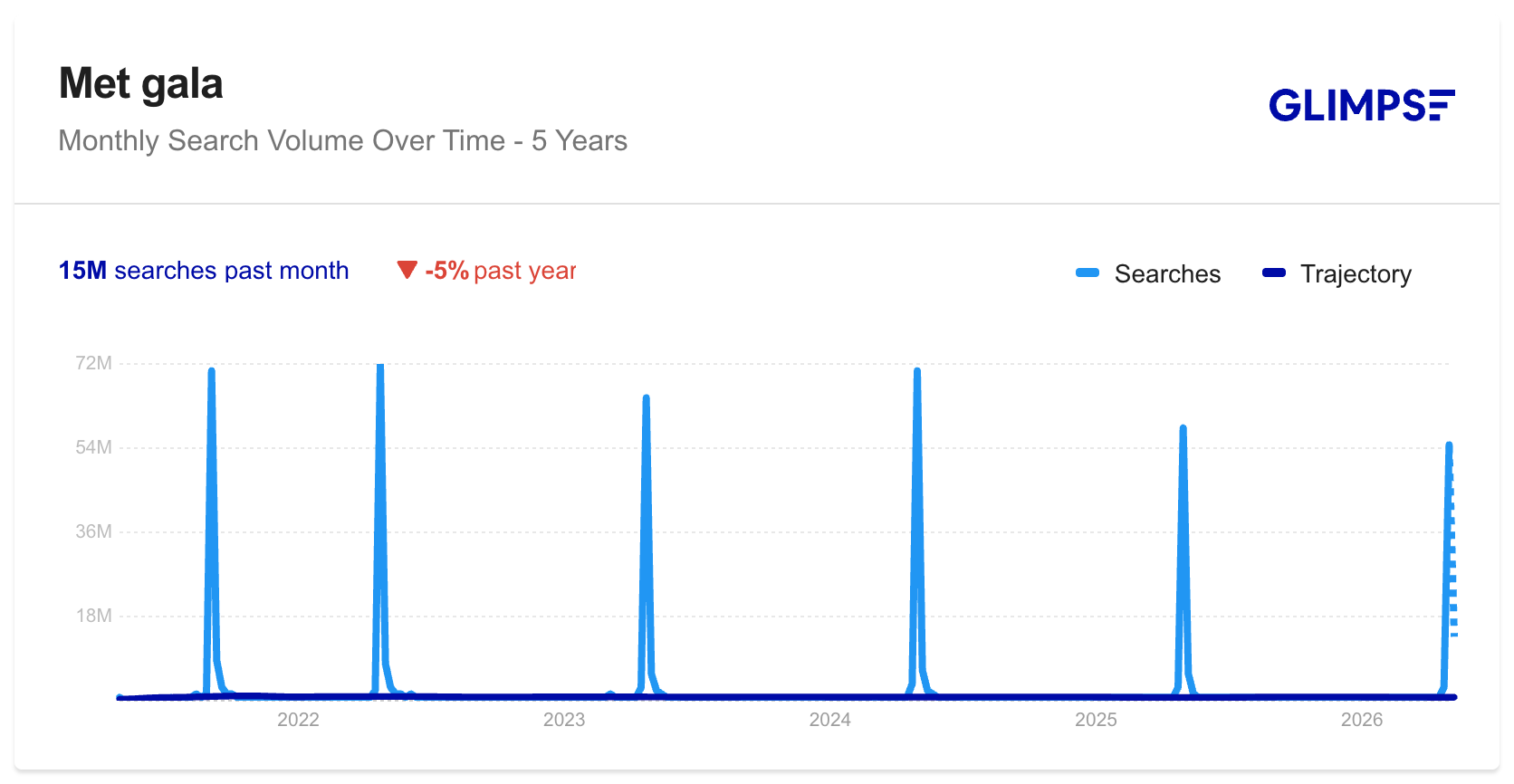
I had reported that the 2026 Met Gala was the most searched-for in recent history. One correction to make upfront: Glimpse (my search volume tool) was reporting partial, estimated data at the time of making the post and now (updated on May 10) the final numbers are in. The total interest in the event is down by 5% from last year, at 15M searches this year compared to 16M last year.
Back to the question: what proportion of search volume came from protest interest? I can’t answer that directly, but I can point to a few things. First, “Met Gala protest” and “Met Gala boycott” don’t appear anywhere in Glimpse/Google’s related searches for the event this year.
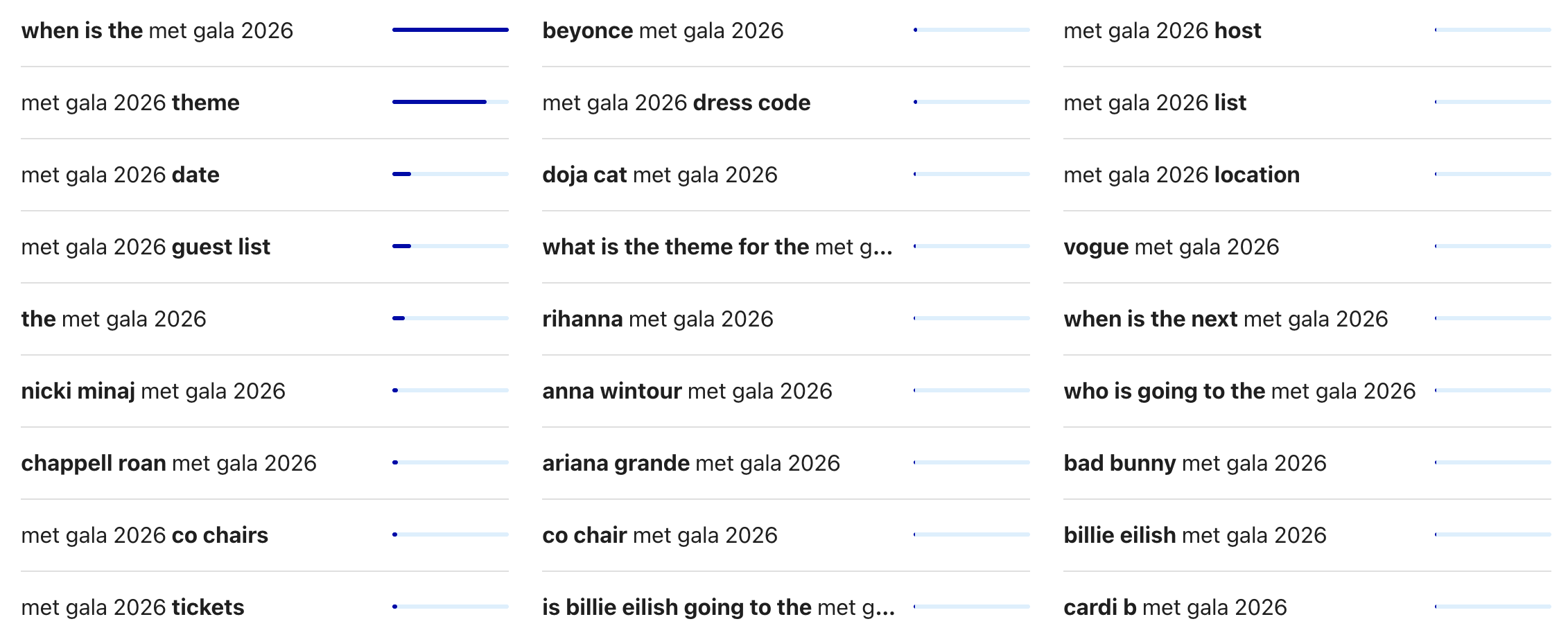
I don’t think this is suppression because I can still pull search volume data on both terms directly:
Met Gala: 15M
Met Gala Theme: 2M
Met Gala Boycott: 17k
Met Gala Protest: 9k
Combined protest and boycott searches total ~26k, meaning roughly 77x more people searched for the just the theme (~2M searches) than the boycott or protest.
I am not really sure how to land this finding.
While pockets of the internet (including mine) point to the hypocrisy of the whole event, the data suggests that protest sentiment didn't meaningfully dent mainstream interest. The highest search volumes indicate that most people were there for exactly what the Met Gala has always been: the outfits, the celebrities, and the same circular conversations: "xyz person isn't on theme" (who cares), "is xyz pregnant" (stop doing that), "every look is so uninspired" (you could do better?). The same Met Gala discourse that happens every single year.
A few interesting things I have read/listened to on the event:
Burn After Reading’s How the Met Gala Became Cringe by Anastasia Vartanian (aka fatanawintour) points to the subtleties in the decline of the Met Gala that are not easily surfaced via data.
Lauren Sherman’s Fashion People episode on the topic discusses how heavy-hitting taste makers like Lauren Santo Domingo chose not to go this year — more evidence on how tacky the whole event has become.
From me:
Apologies for being very MIA — the combination of settling into working a real fashion job while also keeping Style Analytics alive/active has been harder than expected. I am planning to write a piece (or at the very least answer your questions) on what my new role is and what it is like actually being a “data analyst in fashion”. Also: no graphs today mostly because I am writing this and publishing before starting work at 9/9:30am and just wanted to get the important parts out.
I recently spent some offline time in Seoul and Tokyo. Originally I was going to write a list of my favourite fashion places, but my boyfriend beat me to it. We have the same type of love for fashion, so the recommendations are nearly identical across our two perspectives.
